
Technology Leader Award — Kenneth Richter
2026 Technology Leader Award
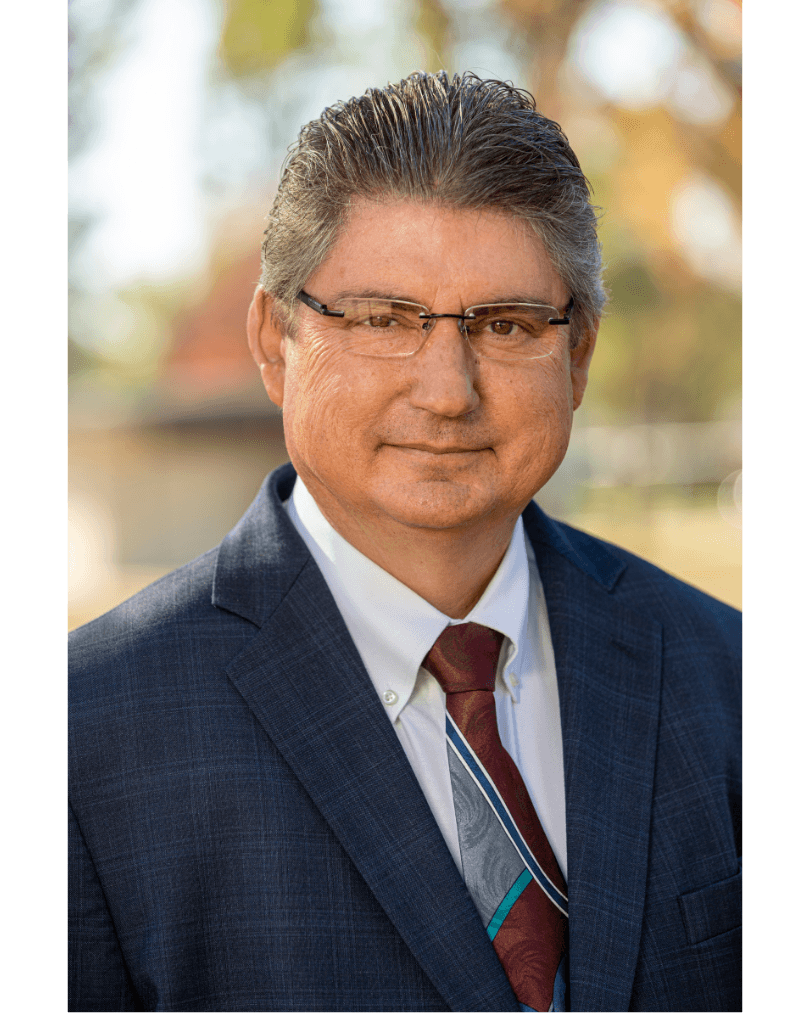
Kenneth Richter
Coordinator - Broadcast/Network Engineering
Kern County Superintendent of Schools
Kenneth Richter has been a leading figure in broadcast, microwave, and Wi-Fi technology in education for over three decades. He has played a vital role in providing technical leadership and innovation to the school sites and districts in Kern County. In the early 1990s, Ken spearheaded the Kern Educational Telecommunication Consortium Initiative in collaboration with leading K-12 school districts, the Kern Community College District, and California State University, Bakersfield—the initiative aimed to revolutionize technology in education and bring telecommunication connectivity to Kern County. The strategy proved successful and was replicated to create the Fiscal Crisis Management Assistance Team (FCMAT) Satellite Network and Central California Telecommunication Network.
Ken's expertise and efforts have resulted in California's most extensive educational microwave network. He has managed and engineered technology initiatives worth over $ 30 million, and his subject matter expertise has earned him recognition as a Court Expert. Previous private sector employment includes Chief Engineer for KADY, KUVI, KUZZ, KUZZ AM/FM, and Director of Technology for Univision Television. Ken holds a single-subject teaching credential in Industrial Arts and an FCC General Radio-Telegraph License, which he earned after graduating from California State University, Northridge, in Radio and Television Broadcasting.
Ken's contributions to technology in education are widely recognized, and he continues to serve on several committees and task forces. He has served on the CITE Resource Programs Committee, the CITE Framework Task Force, the CITE Awards Task Force, and as Co-Chairman of the Kern County Regional CITE Group. Ken graduated from the Chief Technology Officer Mentor Program and served on the CITE/CCEE Digital Divide Task Force and the CITE Member Engagement Committee.
Q&A
How long have you been in your current role and what career opportunities shaped your path?
“I have spent more than three decades with the Kern County Superintendent of Schools, where I have focused on broadcast engineering, microwave communications, networking, wireless technology, and educational telecommunications. Over the years, my role has evolved along with the technology, but the mission has remained the same: using technology to connect schools, expand educational opportunities, and provide reliable communications to districts throughout Kern County.
One of the most significant opportunities in my career came in the early 1990s, when I helped develop the Kern Educational Telecommunication Consortium in partnership with local K–12 school districts, the Kern Community College District, and California State University, Bakersfield. When high-speed connectivity between educational institutions was still uncommon, we built a regional telecommunications infrastructure using microwave and other technologies to connect schools and colleges across a geographically challenging county. That work ultimately contributed to what became one of California's most extensive educational microwave networks, and the model was later replicated for other educational telecommunications initiatives.
My career has also been shaped by opportunities outside of K–12 education. I worked in commercial radio and television as Chief Engineer for stations including KADY, KUVI, KUZZ AM/FM, and later served as Director of Technology for Univision Television. Those experiences strengthened my background in RF engineering, broadcasting, FCC compliance, emergency communications, and large-scale technical operations, and I brought that knowledge and practice into my work supporting education.
I have also had opportunities to grow as a technology leader through CITE, the Chief Technology Officer Mentor Program, the CITE/CCEE Digital Divide Taskforce, and several CITE committees and task forces. Serving as Co-Chair of the Kern Regional CITE Group has allowed me to share what I have learned while continuing to learn from other technology professionals.
Looking back, my career has never followed just one technology. It has moved from broadcasting and analog microwave to digital networks, broadband, Wi-Fi, and modern communications systems. What has kept me in this work for more than 30 years is the opportunity to solve difficult problems, build infrastructure that lasts, mentor others, and use technology to improve opportunities for students and the communities our schools serve.”
What's a recent win you've had at work?
“One of my most memorable recent wins came when a local high school district's internal 4,160-volt electrical distribution system, built in 1942, failed catastrophically, leaving the entire campus without power.
The situation required an immediate response. Working with electrical contractors, Maintenance and Operations, the IT Department, and district leadership, we developed a temporary power solution that involved connecting four 1-megawatt rental generators to campus electrical subpanels. Together, we restored power, brought critical systems back online, and allowed the school to reopen instead of remaining closed for an extended period.
What made the experience especially meaningful was being able to draw upon knowledge from much earlier in my career. My broadcast engineering background included working with and being trained on high-power television transmitters, including klystron and IOT systems operating at voltages as high as 120,000 volts. That experience taught me to work around high-voltage systems, understand complex power distribution, troubleshoot under pressure, and, most importantly, respect the safety requirements of high-energy electrical systems.
Although a high school campus and a high-power broadcast transmitter are very different environments, the underlying engineering principles are remarkably similar. Being able to take knowledge gained decades earlier and apply it to such an unusual and urgent situation was extremely rewarding.
The impact was significant. Restoring power allowed the school to remain open, students to return to the classroom, and district operations to continue. It also helped the district avoid approximately $150,000 per day in lost Average Daily Attendance (ADA) revenue.
For me, this project represents what I enjoy most about technology and engineering: solving problems that do not come with an instruction manual. It also reminded me that experience gained throughout a career never really becomes obsolete. Sometimes the skills learned decades ago turn out to be exactly what is needed to solve today's problem."
Can you share a specific moment when CITE had a meaningful impact on you or your organization?
“One of the most meaningful impacts CITE has had on me personally was the opportunity to graduate from the Chief Technology Officer Mentor Program. The program expanded my technical and leadership skills and, just as importantly, gave me a broader understanding of how technology can be used strategically to support instruction, operations, cybersecurity, infrastructure, and long-term planning.
What made that experience especially valuable was being able to bring that knowledge back to Kern County and share it with smaller school districts that may not have large IT departments or the same access to specialized expertise and resources. Many of our smaller districts depend on collaboration, trusted relationships, and shared knowledge to solve problems that larger organizations may have dedicated staff to address.
CITE has helped make that collaboration possible. Through its programs, professional networks, committees, training opportunities, and shared resources, CITE continues to empower local educational agencies to make the most of limited resources. Its programs leverage shared expertise, collective purchasing power, and common needs to create greater efficiency and cost savings for school districts throughout California.
For me, the greatest value of CITE has never been simply what I have learned personally. It is being able to take that knowledge, bring it back to my region, and share it with others. When one technology leader learns something through CITE and then passes that knowledge on to several smaller districts, the impact extends far beyond a single individual or organization. That spirit of collaboration and service is what makes CITE such an important part of California's educational technology community."